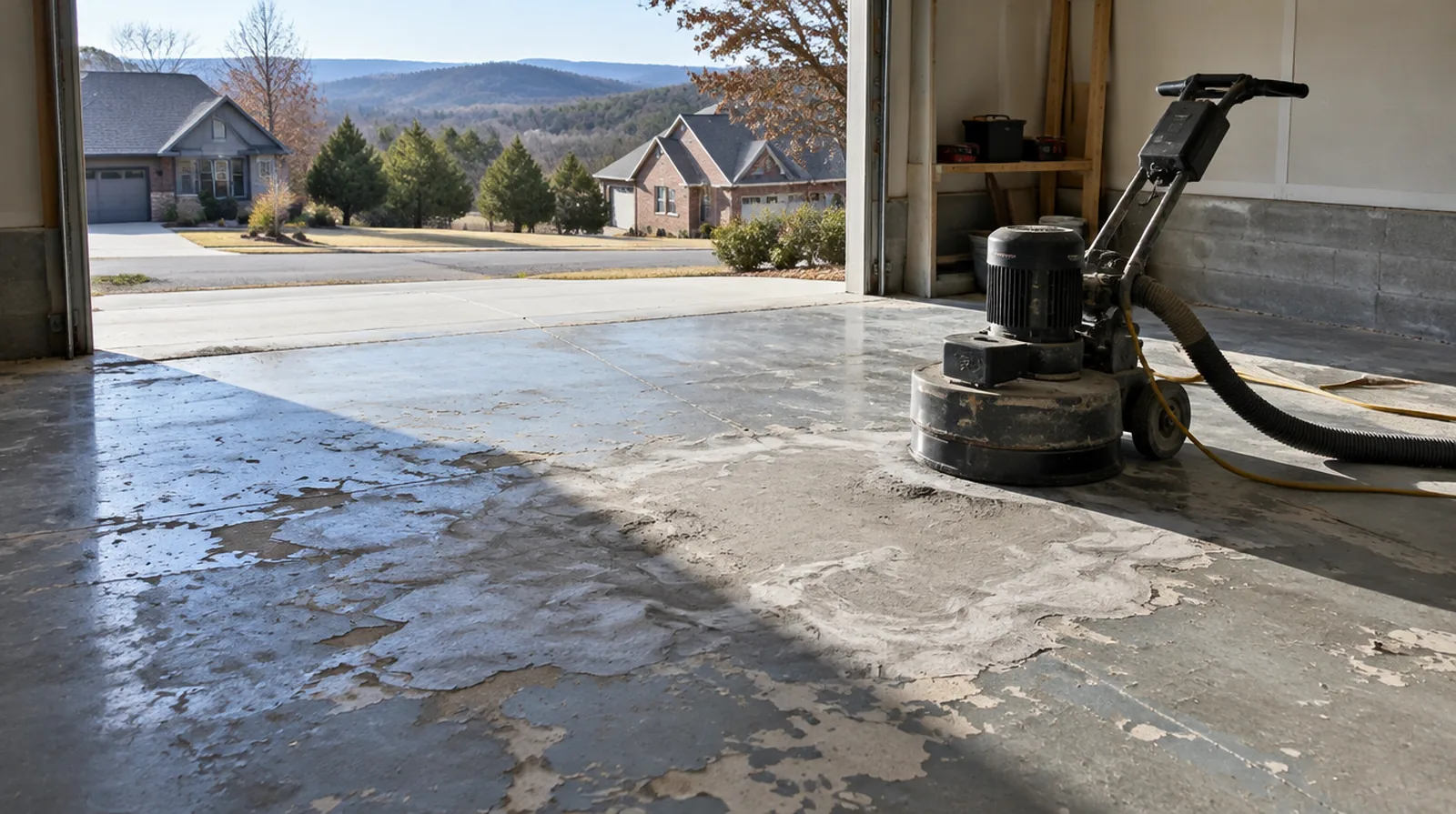
Common causes
- Coating applied over unground concrete
- Moisture from a new or damp slab
- Thin DIY kits that cannot handle hot tires
- Tops that yellowed or wore through
New builds and early coatings
Some new homes get coated too soon after the slab is poured. Trapped moisture causes bubbles. We remove the coating, let the slab dry and recoat.
How we fix it
Grind off the failure, test the slab, use the right primer, and install a full system.
Small repairs
If damage is limited, we may patch and blend.
Read about our garage floor process.
Coated too soon
In a fast-building area, some new homes get their garage coated very early. If the slab had not finished drying, the coating can blister within months. We remove it, let the slab finish drying, test, and recoat.
Bike shop chemicals
Degreasers and solvents used on bikes can soften some cheaper coatings over time. When we rebuild a gear garage floor, we choose a top coat that resists the chemicals you use.
Spot fixes on newer floors
On a well-bonded floor, a gouge from a dropped rack can be cut out and blended in.
Repairing coatings in newer and older homes
Many epoxy floor repair jobs in Bentonville involve newer homes where a coating went on too soon, before the slab had dried. That can cause bubbling or peeling within a year or two. We also see thin DIY kits lifting under hot tires, and floors damaged by bike stands, dropped tools or chemical spills.
How we decide what to do
We test bond strength, look for moisture, and assess how much of the floor is affected. If a few spots failed on a well-bonded floor, we can patch. If the coating is coming up in many places, a full removal and new install is the better investment.
Repair questions
Can you fix a floor another company installed? Yes. We test it first.
How long does a repair take? One to two days for most patches.
Will a patch match? We get close. A new clear topcoat over the whole floor can help blend old and new.
Signs a floor needs attention
Look for peeling at tire paths, white haze, bubbles, and edges lifting at the garage door. These spread with time, so calling early keeps the repair small.
Repairing worn and stained floors
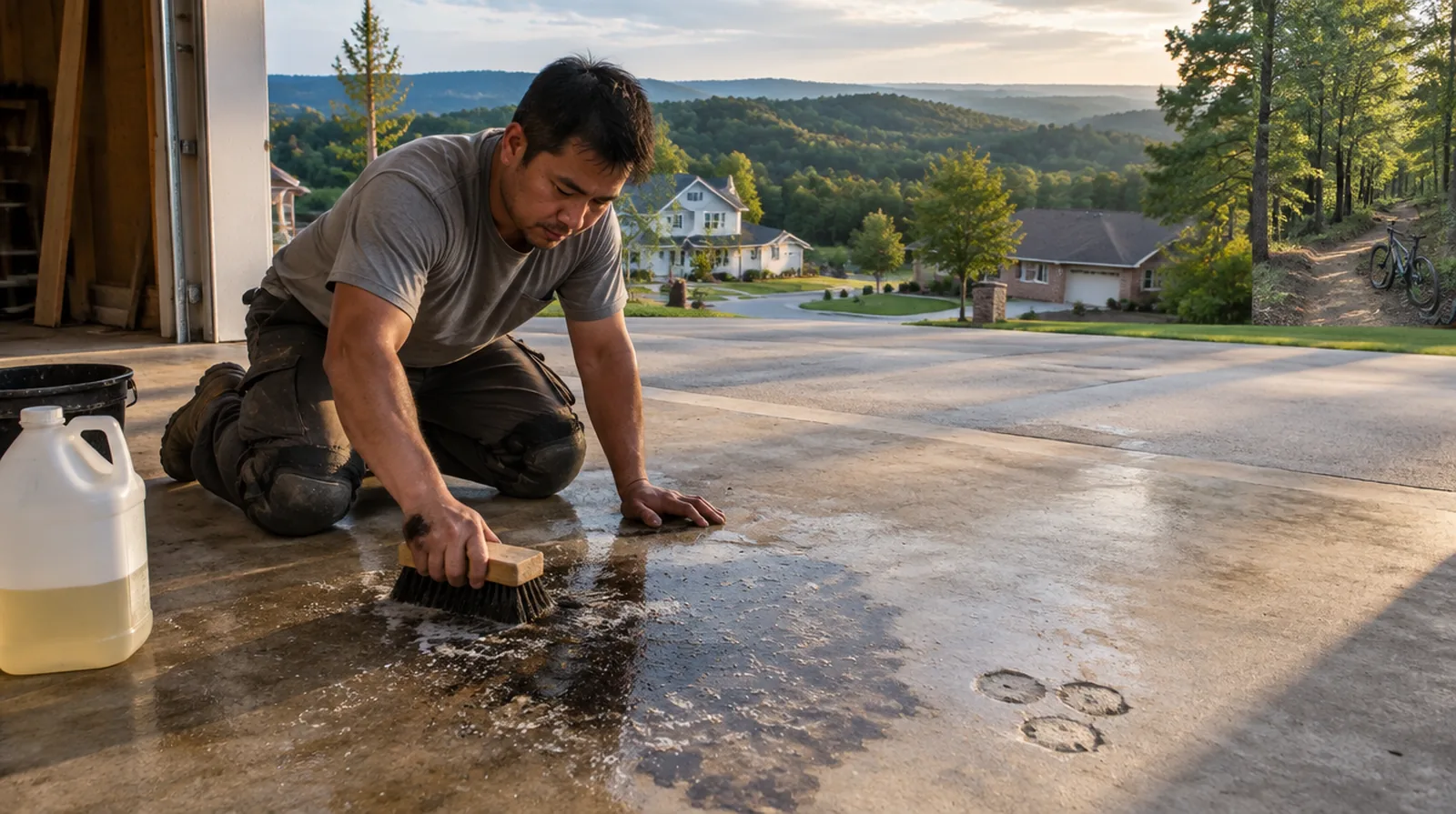
Floors in older Bentonville homes and shops often have oil stains, pitting, cracks or a peeling coating from years ago. We look at what is failing and why before recommending a fix.
Oil and fluid stains
Oil soaks into bare concrete and can keep a new coating from bonding. We scrub with degreaser, grind affected spots and, if needed, use a primer made for oil-contaminated slabs.
Pits and spalling
Small pits and flaking surface concrete are common on older slabs. We grind out loose material and fill with repair mortar so the surface is sound before coating.
Peeling coatings
Store-bought kits applied without grinding often peel within a few seasons. We remove the old coating completely and start with a proper prep.
Cracks
Hairline cracks can be filled before coating. Wider cracks or ones that move need a flexible filler, and we will explain whether they may show through.
Repair or replace
If most of the floor is failing, a full redo is often a better value than patching. We will give you an honest recommendation.
Matching an existing floor
A perfect color match on an aged floor is hard. We explain your options: a spot blend, a fresh topcoat across the room, or a full recoat for an even finish.
Threshold damage
The edge at the garage door takes water, freeze cycles and tire impacts. We cut back loose concrete, rebuild the edge with repair mortar, and coat it so it blends in.
Moisture problems
If moisture is coming up through the slab, a new coating can lift again. We test first and use a primer suited to the readings so the repair lasts.
Schedule a repair visit
Call (479) 326-7458.