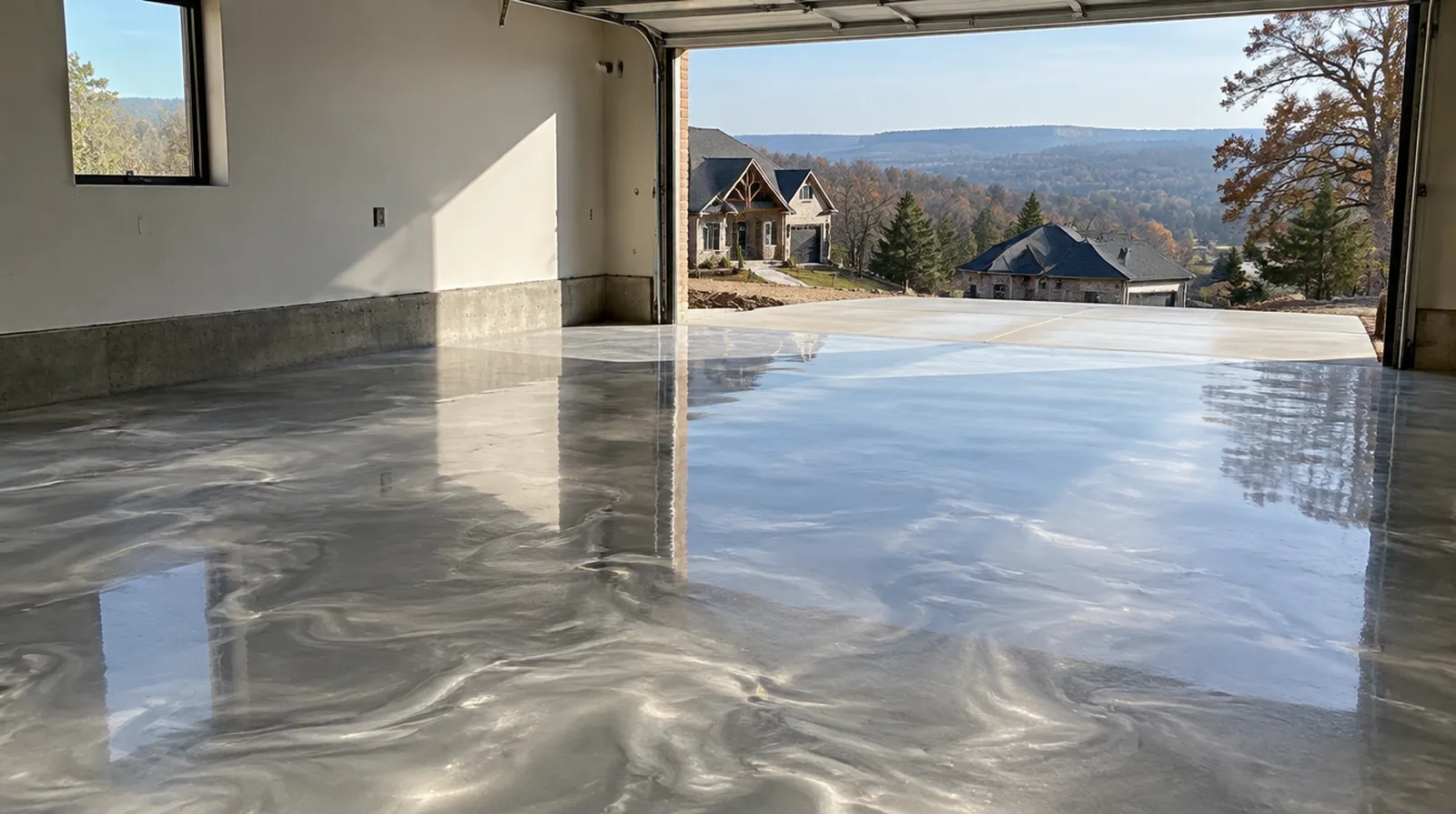
What metallic does
Metallic pigments shift and settle in clear epoxy, creating a floor with depth, motion and shine. It can look like marble, water or swirling clouds of color.
Popular uses
Studios, galleries, offices, salons, bonus rooms and finished basements.
How we install it
Careful prep, a primer, then the metallic coat worked by hand while it levels. A clear top seals and protects it.
Things to consider
Metallic is semi-transparent, so the slab must be smooth. Glossy finishes show fine scratches, so a polyaspartic top is often added.
Timeline
Two to three days, plus extra time before heavy furniture goes in.
Studio and retail spaces
Galleries, creative studios and boutiques downtown make great places for metallic floors. The finish can be tuned to complement the room, from quiet silvers to warm bronze tones.
Metallic epoxy floors in Bentonville
Bentonville's art and design scene, anchored by Crystal Bridges and The Momentary, has rubbed off on homeowners and businesses alike. Metallic epoxy is a way to bring that creativity to the floor. It works well in home studios, game rooms, offices, salons and retail spaces that want a floor people notice.
Getting the slab ready
Metallic finishes show every flaw, so we grind the slab flat, fill cracks and holes, and sometimes add a leveling coat. In new construction, we test moisture before pouring.
Questions about metallic floors
Is every floor unique? Yes, because the pattern is created by hand.
Can I choose the colors? Yes, we bring sample boards so you can see options in your space.
Is it durable? It is a strong epoxy floor, but glossy finishes show scratches. A satin topcoat can help.
Can it go in a garage? It can, though flake is more forgiving for daily car traffic.
Care
Dust-mop regularly and clean with a mild cleaner. Felt pads under furniture prevent scratches.
Metallic in creative workspaces
Home studios, photography spaces and design offices often pick metallic floors for their depth. Lighter metallic tones bounce light around a room without windows, while darker ones create a dramatic backdrop for displays. We will help you choose based on the room and its light.
Timeline for a metallic pour
Plan on three to four days: prep and primer, the metallic pour, then a clear coat and cure. Light use after a couple of days.
Metallic floors for lofts and bonus rooms
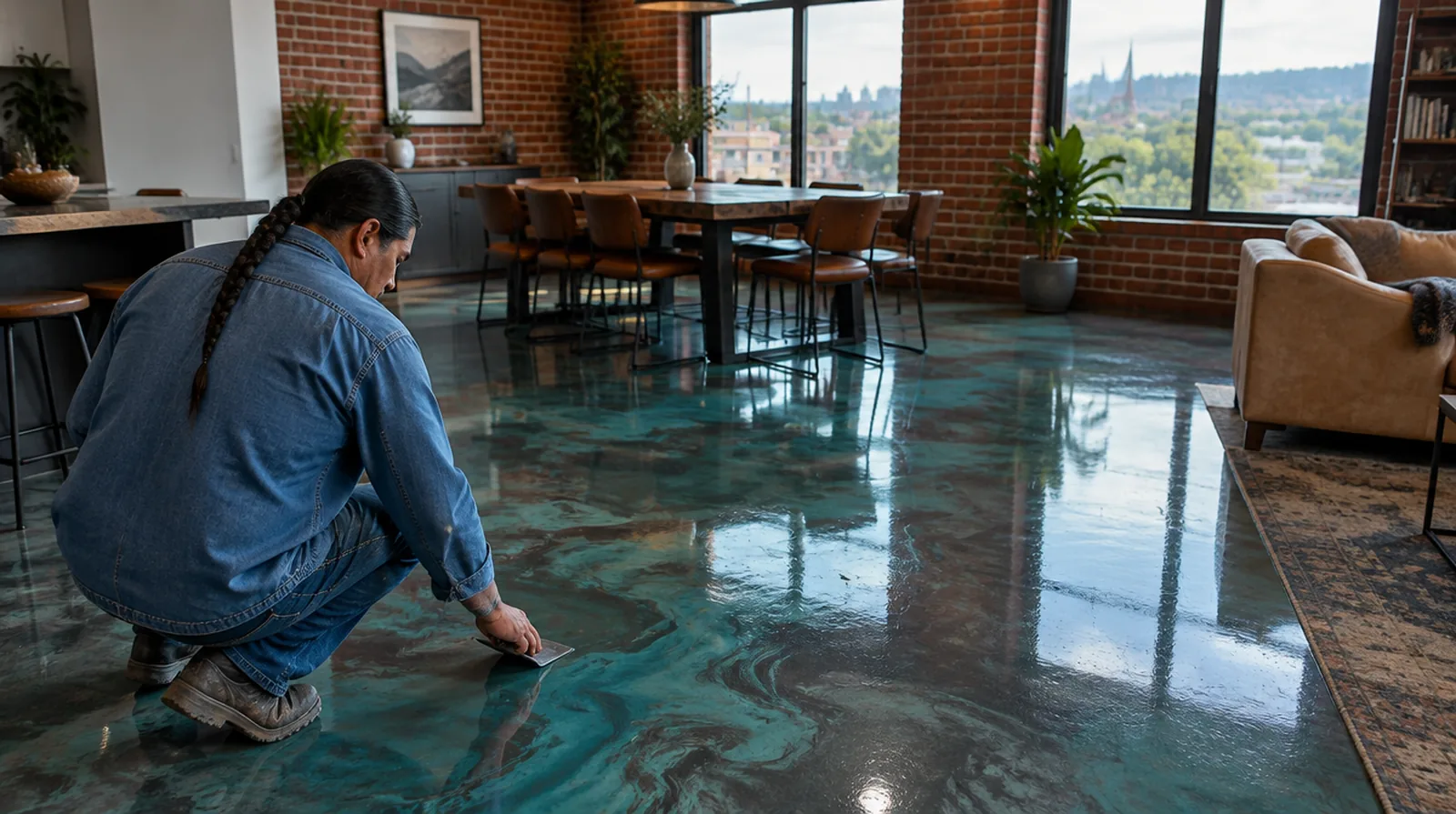
Metallic epoxy uses pigments that create swirls and depth, giving each floor its own look. Around Bentonville, owners choose it for downtown lofts, basements, bonus rooms and showroom spaces.
Downtown lofts
Exposed brick, large windows and open plans in downtown buildings pair well with metallic floors. Teal, charcoal, bronze and pewter tones are common choices. We look at the existing slab and any old finish that needs removal before quoting.
Basements and media rooms
Basements are less common here than in some places, but homes on sloped lots often have walkout lower levels. We test moisture first because basement slabs can carry more of it, and we use a primer suited to the readings.
How the look is created
The installer works the metallic coat by hand with rollers, brushes and sprayers to move the pigment. No two floors are the same. We show photos of past color combinations and do a sample board so you know the general look.
Protecting the finish
A clear topcoat goes over the metallic layer to add scratch resistance. Felt pads under furniture and mats at entries help keep the gloss looking good.
Lighting matters
Metallic floors change with the light. Windows, overhead fixtures and lamps all bring out different movement in the finish.
Commercial uses
Salons, boutiques and small showrooms use metallic floors to stand out. In higher traffic areas, we use a tougher topcoat and recommend mats at the entry to help the gloss last.
Budget and timing
Metallic floors take more hands-on time than a basic flake system, and the room needs to stay closed while each layer cures. We give you a clear schedule up front so you can plan around it.
Plan your metallic floor
Call (479) 326-7458.